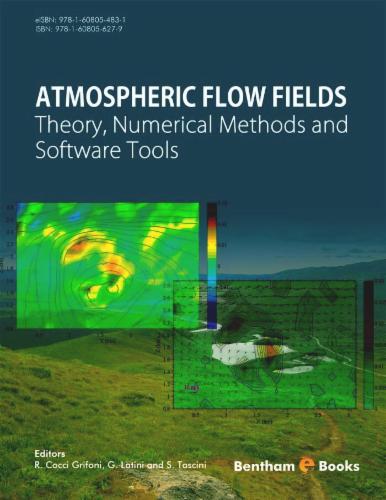
Mathematical models can be used to predict answers to many important questions about the environment. This application comes with several complex theoretical and practical obstacles which need to be resolved. A successfully applicable mathematical model needs to enable researchers to
- Mathematically describe all important physical and chemical processes.
- Apply fast and sufficiently accurate numerical methods.
- Ensure that the model runs efficiently on modern high speed computers.
- Use high quality input databoth meteorological data and emission inventoriesin the runs.
- Verify the model results by comparing them with reliable measurements taken in different parts of the spatial domain of the model.
- Carry out long series of sensitivity experiments to check the response of the model to changes of different key parameters.
- Visualize and animate the output results in order to make them easily understandable even to non-specialists.
This monograph thoroughly describes mathematical methods useful for various situations in environmental modeling -including finite difference methodssplitting methodsparallel computationetc. -and provides a framework for resolving problems posed in relation to the points listed above. Chapters are written by well-known specialists making this book a handy reference for researchersuniversity teachers and students working and studying in the areas of air pollutionmeteorologyapplied mathematics and computer science.
Loading...
Loading...